Free shipping on all orders over $40.

KATE STITH, the Lafayette S. Foster Professor of Law at Yale Law School, served as a trustee (and as vice chair of the Board of Trustees) of her alma mater, Dartmouth College.
Titles by this Author
Related Titles
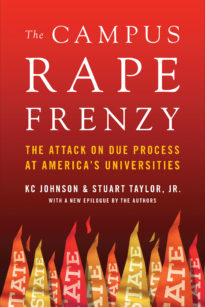
In recent years, politicians led by President Obama and prominent senators and governors have teamed with extremists on campus to portray our nation’s institutions of higher learning as awash in a violent crime wave—and to suggest (preposterously) that university leaders, professors, and students are indifferent to female sexual assault victims in their midst. Neither of these claims has any bearing to reality. But they have achieved widespread acceptance, thanks in part to misleading alarums from the Obama administration and biased media coverage led by The New York Times.
The terms “Front-Row Kids” and “Back-Row Kids,” coined by the photographer Chris Arnade, describe the divide between the educated upper middle class, who are staying ahead in today’s economy, and the less educated working class, who are doing poorly. The differences in education—and the values associated with elite schooling—have produced a divide in America that is on a par with that of race.
From Barack Obama (Harvard and Chicago) to Bill and Hillary Clinton (Yale), many of our current national leaders emerged from the rarefied air of the nation’s top law schools. The ideas taught there in one generation often shape national policy in the next.
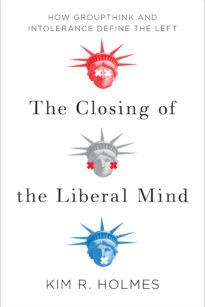
Kim R. Holmes surveys the state of liberalism in America today and finds that it is becoming its opposite—illiberalism—abandoning the precepts of open-mindedness and respect for individual rights, liberties, and the rule of law upon which the country was founded. Instead, liberalism is becoming an intolerant, rigidly dogmatic ideology that abhors dissent and stifles free speech.
A series of near-riots on campuses aimed at silencing guest speakers has exposed the fact that our universities are no longer devoted to the free exchange of ideas in pursuit of truth. But this hostility to free speech is only a symptom of a deeper problem, writes John Ellis.
This is the story of how Title IX, a 1972 law intended to ban sex discrimination in education, became a monster that both the federal government and many college administrators treat as though it supersedes both the U.S. Constitution and hundreds of years of common law.