Free shipping on all orders over $40.
Broadsides & Intelligence
Unlocking Precision Medicine
New medicines in the pipeline can extend lives, save money, and even help prevent disease before symptoms appear – if we don’t discourage their innovators and investors by trying to lower drug prices artificially. Unlocking Precision Medicine explores the environment necessary for creation of these health care game-changers, and explains how the marketplace can effectively make them more affordable to all without killing the golden goose.

Twisting Title IX
This is the story of how Title IX, a 1972 law intended to ban sex discrimination in education, became a monster that both the federal government and many college administrators treat as though it supersedes both the U.S. Constitution and hundreds of years of common law.
Uber-Positive Why Americans Love the Sharing Economy
Entire industries are being transformed, consumers have more power than ever before, and people are finding new ways to earn a living—even in today’s slow economic recovery. All of these improvements stem from the rise of the so-called sharing economy.
Moore vs. Krugman
What happens when a leading conservative economist goes mano a mano with today’s most influential exponent of left-liberal economics, over free markets versus government interventionism? Here are highlights of that showdown between Stephen Moore of the Heritage Foundation and Paul Krugman, Nobel laureate.
The Way Out of Obamacare
In this Broadside, Sally C. Pipes provides a replacement plan for Obamacare – one that will provide affordable, accessible, quality health care for all Americans.
Why Redistribution Fails
In this Broadside, James Piereson explains the progressive case is based upon a serious fallacy: it assumes that the government is actually capable of redistributing income from the wealthy to the poor.
What’s So Bad About Cronyism?
Cronyism is a serious problem in the United States, but unfortunately it is still not very well understood. In this new essay, Jay Cost explains what it is, and why we should be so worried about it.
Against the Obamanet
In this Broadside, Brian C. Anderson explains how the FCC’s power grab for “neutrality” could be devastating for the most dynamic sector of the U.S. economy.

Islam and Free Speech
In this Broadside, Andrew C. McCarthy explains how leading Islamists have sought to supplant free expression with the blasphemy standards of Islamic law, gaining the support of the U.S. and other Western governments.

Open Immigration: Yea & Nay
Alex Nowrasteh explains how a policy of open immigration is consistent with America’s founding principles, while Mark Krikorian argues that the federal immigration program needs to adjust to the realities of modern America.

Common Core: Yea & Nay
In this double Broadside, Sol Stern shows how both sides of the education spectrum have misrepresented the Common Core, while Peter W. Wood explains how the Common Core actually lowers standards while pretending to raise them.

Freedom from Speech
This is a surreal time for freedom of speech. While the legal protections of the First Amendment remain strong, the culture is obsessed with punishing individuals for allegedly offensive utterances. In this Broadside, Greg Lukianoff argues that the threats to free speech go well beyond political correctness or liberal groupthink.
The Inequality Hoax
The controversy over inequality has gathered steam with the publication of Thomas Piketty’s new book, Capital in the Twenty-First Century. James Piereson explains how Piketty’s book is flawed and advances a narrow understanding of the market system.
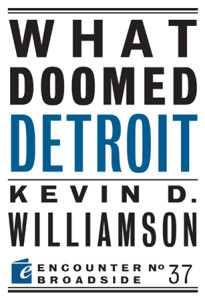
What Doomed Detroit
Many cities have struggled with the decline of key industries, from Philadelphia’s shipyards to New York’s textile industry, but Detroit—which is now in bankruptcy—is both a victim of the decline of the Michigan automobile industry and a cause of it.
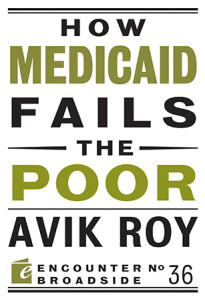
How Medicaid Fails the Poor
Medicaid, America’s government-run health insurance program for the poor, should be a lifeline that provides needed health care to Americans with no other options. Surprisingly, however, it doesn’t.