Free shipping on all orders over $40.
New Releases
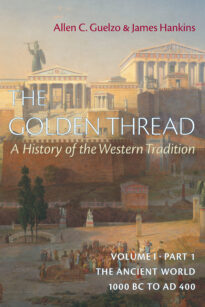
The Golden Thread: A History of the Western Tradition Volume I ~ Part I: The Ancient World, 1000 BC to AD 400
Where do the threads that form the Western tradition originate, and how were they woven together? What are the sources of our modern ideas about science, freedom, equality, law, good government, and virtue? These are the questions explored in The Golden Thread, Volume I, Part 1: The Ancient World, written by James Hankins. Replete with lavish classical art, alongside original maps, and the letters, speeches, and quotes of the most important figures of each era, this volume masterfully weaves a vibrant tapestry of the West’s ancient past.
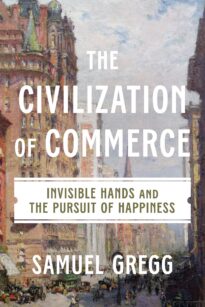
The Civilization of Commerce Invisible Hands and the Pursuit of Happiness
In The Civilization of Commerce, prizewinning author Samuel Gregg demonstrates that commercial society is a civilizational achievement worthy of emulation. Commercial civilization enables individuals to overcome ignorance and isolation, build societies rooted in liberty and justice, and, above all, improve their lives. Gregg offers a framework for understanding and extending a society where prosperity and purpose converge, and reminds us that true progress demands wisdom,
The Age of Error and The West’s Undoing
In The Age of Error and The West’s Undoing, Darwall takes the reader back to 2006—the beginning of the age of error—and ultimately through the brutal return of geopolitics.

Studies in Machiavellian Political Philosophy
Studies in Machiavellian Political Philosophy gathers Michael Anton’s work on the founder of modern political thought and his enduring influence on the Western tradition.

The Phoenix Principles Toward a Rebirth of American Education
As America approaches its 250th anniversary, questions about the purpose and future of education have never been more urgent. The Phoenix Principles offers a bold and unifying vision for how education can renew the American spirit and sustain a free and virtuous republic for generations to come.
The Myth of Birthright Citizenship What the Fourteenth Amendment Really Says
In The Myth of Birthright Citizenship, Richard A. Epstein explains what the Constitution actually says about citizenship—and what it doesn’t.
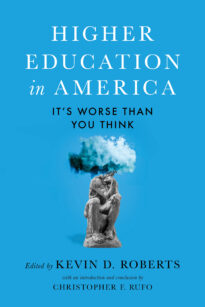
Higher Education in America It's Worse than You Think
Higher education is in crisis. To capture the full scope of the problem, The Heritage Foundation assembled college presidents, professors, and researchers from across the country to contribute their unique perspectives about the problems plaguing higher education and to offer solutions.

The Suicide of France The Quiet Revolution that Destroyed a Nation
After the death of de Gaulle in 1970, France’s new leaders launched a quiet revolution. Under the guise of leading the country into a new age, they destroyed everything that made it great. This book pulls back the veil on their project, showing how they repudiated France’s culture, heritage, institutions, and her very people.

Mastering the Four Arguments The Classical Art of Persuasive Writing
Based on 30 years of his award-winning teaching of writing, Dr. Gregory Roper shows how you can use the nearly-forgotten ancient technique of Stasis Theory to build better, cleaner, more persuasive prose.
Why Democracy Needs the Rich
Why Democracy Needs the Rich challenges the prevailing narrative that wealth undermines democracy, offering a bold, thought-provoking case for the essential role of the rich in sustaining and enhancing democratic institutions.

Crisis of the Two Constitutions The Rise, Decline, and Recovery of American Greatness
Crisis of the Two Constitutions details how we got to and what is at stake in our increasingly divided America, as well as what we should strive to commemorate as the nation approaches its 250th birthday.

No Liberty to Libel The Constitutional Case against New York Times v. Sullivan
Though many have heralded Sullivan as a landmark ruling in defense of First Amendment freedoms, in No Liberty to Libel, Carson Holloway argues that the Supreme Court erred dangerously in its interpretation of the Constitution. Holloway contends that the Court should revisit and reject the Sullivan doctrine.
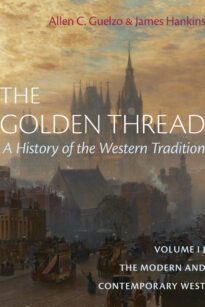
The Golden Thread: A History of the Western Tradition Volume II: The Modern and Contemporary West
The Golden Thread, Volume II begins in 1500, when the Protestant Reformation brought an end of the Roman Catholic Church’s dominance over European states. It then turns to the rise of imperial powers that swiftly circled the globe, and to the explosion of intellectual, economic, and technological advancements sparked by the Enlightenment. In its closing chapters, The Golden Thread engages with the most significant questions facing the West today.

Seductive AI
Fears of AI often involve Skynet or Colossus. But a greater, and certainly more immediate, threat may be those forms of AI that require much less in the way of brute force braininess, and that can instead take advantage of innate human characteristics. What if the easiest way to conquer the world isn’t nuclear weapons, but cuteness, or sexiness, or simply friendliness?
Where Harvard Went Wrong Fifty Years of Commentary that Fell on Deaf Ears
In Where Harvard Went Wrong, one professor stands up to a whole faculty, offering arguments rather than evasions and equivocation, keeping as his lodestar the principle that education must conserve the tradition of learning as well as progress beyond the present. This book is meant for both parties—a guide for conservatives and a gentle, friendly reproach to liberals.