Free shipping on all orders over $40.
Forthcoming

The Phoenix Principles Toward a Rebirth of American Education
As America approaches its 250th anniversary, questions about the purpose and future of education have never been more urgent. The Phoenix Principles offers a bold and unifying vision for how education can renew the American spirit and sustain a free and virtuous republic for generations to come.
The Civilization of Commerce Invisible Hands and the Pursuit of Happiness
In The Civilization of Commerce, prizewinning author Samuel Gregg demonstrates that commercial society is a civilizational achievement worthy of emulation. Commercial civilization enables individuals to overcome ignorance and isolation, build societies rooted in liberty and justice, and, above all, improve their lives. Gregg offers a framework for understanding and extending a society where prosperity and purpose converge, and reminds us that true progress demands wisdom,

The Age of Error and The West’s Undoing
In The Age of Error and The West’s Undoing, Darwall takes the reader back to 2006—the beginning of the age of error—and ultimately through the brutal return of geopolitics.
The Golden Thread: A History of the Western Tradition Volume I ~ Part I: The Ancient World, 1000 BC to AD 400
Where do the threads that form the Western tradition originate, and how were they woven together? What are the sources of our modern ideas about science, freedom, equality, law, good government, and virtue? These are the questions explored in The Golden Thread, Volume I, Part 1: The Ancient World, written by James Hankins. Replete with lavish classical art, alongside original maps, and the letters, speeches, and quotes of the most important figures of each era, this volume masterfully weaves a vibrant tapestry of the West’s ancient past.
Why We Walk on Eggshells How Our Civil Rights Laws Stifle Our Civic Discourse
By prohibiting discrimination, civil rights laws were intended calm tensions among the races and between the sexes. And they’ve had a lot of success. But some civil rights laws have had the opposite effect.
Blood of Tyrants 250 Edition George Washington & the Forging of the Presidency
As the United States commemorates its 250th anniversary and looks toward the future, Blood of Tyrants offers a powerful reminder that the American story is one of resilience, self-government, and an enduring commitment to liberty.

Taking Religion Seriously (PB)
Taking Religion Seriously is Murray’s autobiographical account of the decades-long evolution in his stance toward the idea of God in general and Christianity in particular.
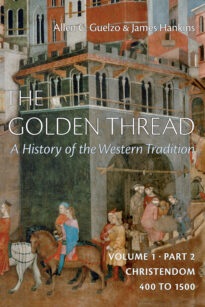
The Golden Thread: A History of the Western Tradition Volume I ~ Part II: Christendom, 400 to 1500
How did a persecuted sect become the faith of an empire, and how was European civilization built on the heritage of Greece and Rome, mediated by “civilized barbarians”? How did Europe both preserve and transform antiquity while building a distinctive civilization of its own? These are the questions explored in The Golden Thread, Volume I, Part 2: Christendom, written by James Hankins.
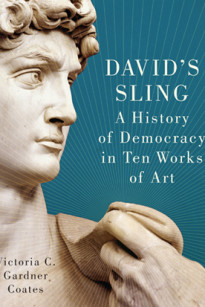
David’s Sling (PB) A History of Democracy in Ten Works of Art
David’s Sling places into context ten canonical works of art executed to commemorate the successes of free societies that exerted political and economic influence far beyond what might have been expected of them.
Nazi-Communism Why Marxist-Leninists and Nazi Fascists are Ideological Twins
Nazi-Communism by Axel Kaiser is a provocative, meticulously argued treatise that dismantles the conventional narrative separating Nazism from communism. Kaiser exposes the double standard in academia and culture that sanitizes communism’s 100-plus million victims while demonizing Nazism alone, arguing that Nazism is essentially communism stripped of internationalism and its inclusive utopian mask.
The Human Cost of Artificial Education
In this Broadside, investigative journalist Priscilla West exposes the construction of artificial education: a system of continuous surveillance, sorting, and conditioning—and one of the most consequential, least understood transformations of our time.

Tolkien and the Inklings Men of the West
The Inklings were, to be sure, the most important literary group of the twentieth-century, rivaling and surpassing the much touted Bloomsbury Group. This book focuses on the Inklings from Tolkien’s point of view. As with Lewis, Barfield, Charles Williams, and Lord David Cecil, Tolkien wanted the group to serve as a bardic defense of Western civilization, Socrates through Dante. Birzer explores, as they did, how Tolkien’s approach to myth and legend might reawaken the West to what it could be and to what it once aspired.

Classroom Comeback How Americans Can Make Education Great Again
Classroom Comeback confronts one of the defining challenges of our time: the steady erosion of American education over decades and the urgent need to restore it. It offers practical, actionable reforms that parents, lawmakers, educators, school board members, and community leaders can champion to restore rigor, transparency, values, and excellence.
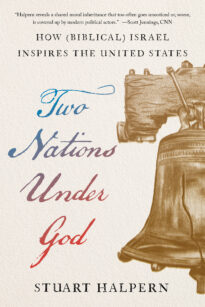
Two Nations Under God How (Biblical) Israel Inspires The United States
In Two Nations Under God: How (Biblical) Israel Inspires America, Stuart Halpern demonstrates that America’s identity has been profoundly shaped by the people, principles, and promises of the Jewish national project. Spanning every era of American history and reaching across political and denominational lines, this compelling work reveals how the Hebrew Scriptures have influenced America’s vision of liberty, justice, covenant, and civic purpose.
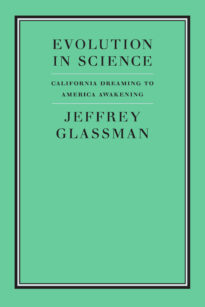
Evolution in Science California Dreaming to America Awakening
Jeff Glassman offers a deep dive into the California Science Framework and a blueprint for K-12 science education that holds significant sway across the U.S. He presents a pointed critique and puts forth an alternate approach to fostering science literacy, aiming to benefit both students and the wider public.